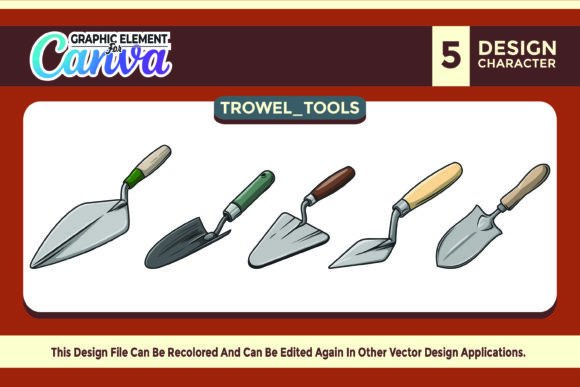
Trowel Tools Graphic Element Set
First Impressions: Farm-Fresh, Not Fussy
Opening the Trowel Tools Graphic Element Set felt like pulling a well-used trowel from a sun-warmed garden shed—practical, grounded, and quietly confident. These five vector characters aren’t cartoonish or overly cutesy; they’re clean-lined, proportionally balanced, and detailed just enough to read at small sizes without collapsing into visual noise. One shows a trowel resting against a burlap sack, another pairs it with a sprig of mint and clay pot—subtle, intentional, and full of quiet storytelling. As an embroidery designer who’s stitched everything from nursery quilts to boutique aprons, I immediately saw how these would translate: not as “cute farm clipart,” but as thoughtful design assets for makers who value authenticity over trend-chasing.
Real Project Test: A Linen Tote Bag for a Local Plant Shop
I tested the set on a 12” x 14” heavyweight natural linen tote—exactly the kind a small-batch plant shop might use for weekend markets. I chose the trowel + terracotta pot illustration, resized it to 3.5”, and digitized it for embroidery using standard satin and fill stitch techniques. The clean vector outlines translated beautifully: no jagged edges, no ambiguous curves. Even the subtle texture in the trowel’s metal edge held up in stitching—no blurring, no thread nesting. Customers noticed it right away. “Is that *my* trowel?” one asked, laughing. That kind of recognition—warm, personal, slightly nostalgic—is gold for handmade product appeal.
Where It Shines (and Where to Pause)
The Trowel Tools Graphic Element Set excels on structured, medium-to-heavyweight fabrics: canvas tote bags, denim aprons, cotton tea towels, and twill caps. On sweatshirts, it reads clearly even at 4” wide—no loss of definition in the handle curve or pot rim. For baby embroidery, I’d lean toward the simpler trowel-only icon (no tiny leaves or fine stems) on organic cotton onesies—it maintains legibility after repeated washing and gentle ironing.
But here’s where attention matters: on stretchy knits like jersey tees or curved surfaces like structured baseball caps, avoid the most intricate version—the one with layered soil lines and vine accents. Those fine interior details can blur or pucker without precise stabilizer choice and careful hooping. Likewise, on dark fabric, test thread contrast first. A light ecru satin stitch on charcoal linen looked elegant—but only because I swapped from default white thread to a soft oat color. Always run a black-and-white mockup before finalizing.
Small Hoop? Think Smart, Not Small
If you’re working with a 4” hoop, skip the full trowel + basket composition. Instead, isolate the trowel silhouette alone—it’s strong, recognizable, and stitches cleanly under tight constraints. That same icon works perfectly as an embroidered patch backing or a minimalist cap front logo. For Etsy sellers listing digital embroidery files, this versatility is a real advantage: one set, multiple applications, no redraw needed.
What It Adds to Your Finished Product
This isn’t just decoration—it’s context. A kitchen towel with the trowel + herb motif tells a story before anyone reads the label. A personalized baby bib with the single trowel icon feels intentional, not generic. That lifts perceived value. Customers pay more for handmade products that feel considered, and the Trowel Tools Graphic Element Set delivers that tone effortlessly.
It also supports brand consistency. If you sell garden-themed goods—seed packets, ceramic pots, botanical prints—these icons unify your visual language across physical and digital touchpoints. Use them in Canva for social banners, then stitch the same trowel onto a matching apron. That cohesion builds trust, especially for craft businesses building repeat buyers.
Practical Notes Every Embroidery Designer Should Keep Handy
- Always stitch a test on scrap fabric—especially if pairing with textured weaves or blends. Linen behaves differently than cotton duck.
- Check stitch density before scaling up. Dense fill areas (like soil mounds) may need reduced density on lightweight fabrics to prevent stiffness.
- Confirm hoop size compatibility before digitizing. These vectors scale cleanly, but your machine’s max hoop limits still apply.
- Inspect corners and joins closely—if you’re converting to an applique design, make sure seam allowances are built in or added manually.
- Verify licensing before selling finished items or bundling as part of a commercial embroidery file pack. The product description notes flexibility for “a variety of purposes,” but always double-check scope for your specific use case—especially for digital product sellers and Etsy shops.
- Use proper stabilizer: medium-weight cutaway for knits, tear-away for stable wovens, and adhesive + tear-away for slippery fabrics like rayon blends.
Final Thought: Design That Grows With You
The Trowel Tools Graphic Element Set doesn’t shout. It roots itself quietly in what makers actually need: clarity, adaptability, and quiet charm. It’s the kind of design asset that starts on a tote bag and ends up on a wedding gift for a couple who gardens together—or becomes the signature icon for a small shop’s entire seasonal collection. For embroidery designers, craft business owners, and Etsy sellers building real livelihoods—not just listings—it’s not just another graphics pack. It’s a reliable tool. And like any good trowel, it works best when used with intention, care, and a little dirt under the nails.