Tie Template, Tie Sublimation Template
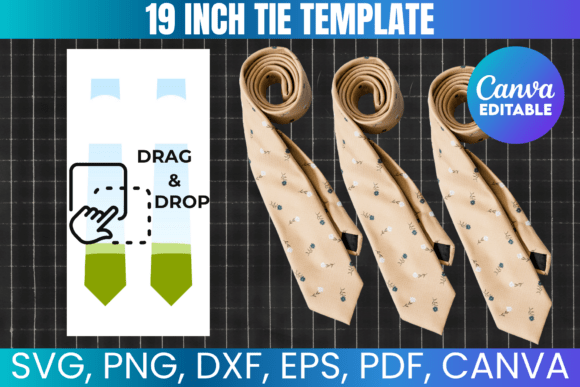
As someone who’s stitched hundreds of custom pieces—from monogrammed baby onesies to boutique aprons for local cafes—I opened Tie Template, Tie Sublimation Template expecting a clean, versatile shape. What I got was something more specific: a classic, slightly tapered necktie silhouette with subtle contouring and a soft, symmetrical point. It doesn’t shout “fashion statement”—it whispers “refined detail.” That’s its strength—and its limitation.
First Impressions: A Quiet, Confident Shape
The design reads as timeless rather than trendy. No florals, no script, no bowtie hybrid—it’s just the tie: smooth edges, balanced proportions, and enough internal space to accommodate small text or a tiny emblem if you’re layering. It feels like a foundation, not a finished idea. That makes it ideal for embroidery designers who value flexibility over flash. I immediately pictured it stitched in navy thread on a cream linen tote bag—minimal, elevated, quietly personal.
Where It Shines (and Where It Doesn’t)
In real-world use, Tie Template, Tie Sublimation Template works best when simplicity is the goal—not when you need drama or dimension. On a sweatshirt cuff? Clean and intentional. As an embroidered patch sewn onto a denim jacket? Crisp and recognizable at a glance. For a baby blanket corner or a holiday tea towel? Gentle, gender-neutral, and easy to scale down without losing legibility.
But here’s what I watched closely: how it behaves on textured fabrics. On terry cloth towels or looped cotton, the outline holds up well—but dense fill stitch areas risk looking muddy unless you reduce density or switch to satin stitch along the edges. On stretchy knits like lightweight jersey, I’d recommend stabilizing heavily and possibly simplifying interior details (if any exist in your version) before stitching. And on dark fabric? Test contrast early. A light gray or ecru thread may vanish; ivory or pale gold pops with quiet authority.
Real Project Moment: The Boutique Apron Line
Last month, I used this template to create a set of embroidered chef-style aprons for a small coffee roastery. We placed the tie shape centered just above the pocket—small enough to feel intentional, large enough to read from across the counter. Because the template is vector-based (SVG), resizing was seamless in Canva and our embroidery software. No pixelation, no distortion. Customers loved the subtlety: it wasn’t a logo, but it *felt* branded. One even asked if we offered matching ties—proof that the shape carries associative weight without needing explanation.
What This Design Says About Your Finished Product
Using Tie Template, Tie Sublimation Template subtly signals craftsmanship and care. It avoids childishness (unlike cartoon motifs) and avoids corporate sterility (unlike rigid logos). That balance lifts perceived value—especially for handmade product listings on Etsy or craft fair booths. Buyers notice clean lines. They respond to proportion. They trust consistency. When your tie shape looks identical across 50 pillow covers or 200 tote bags, it builds brand recognition—even without a name attached.
Design Notes Every Embroiderer Should Check
- Test first on scrap fabric—especially if using textured, stretchy, or dark materials. See how the shape settles after stitching, not just how it looks on screen.
- Review stitch density before sending to machine. Overly dense fills can overwhelm small hoops or cause puckering on lightweight cotton.
- Confirm hoop size compatibility. This isn’t a 1”-wide motif—it’s designed to sit comfortably in a 4x4 or larger hoop, depending on your final scale.
- Inspect corners and points. Sharp tips translate poorly in dense satin stitch unless digitized carefully. If yours has fine points, consider rounding them slightly or switching to running stitch for definition.
- Try black-and-white mockups. Does the shape retain clarity without color? That’s your clue to whether it’ll work on varied backgrounds—light, dark, printed, or textured.
- Use appropriate stabilizer. Tear-away works for stable wovens; cut-away is safer for knits or high-wear items like aprons or caps.
- Verify licensing. Since this is listed as a Graphics product in Canva, confirm whether commercial use—especially resale of finished embroidered goods—is permitted under its terms.
When to Reach for This Template (and When to Skip It)
Reach for Tie Template, Tie Sublimation Template when you’re building a cohesive line: matching kitchen towels and oven mitts, coordinating baby gifts (onesie + burp cloth + bib), or designing subtle branding for a men’s grooming line. It fits naturally into personalized gift workflows—think engraved-style embroidery on a father-of-the-bride handkerchief or a graduation cap liner.
Skip it if you need expressive movement (a flowing bowtie), intricate linework (like paisley or micro-patterns), or ultra-minimalist geometry (a single-line tie). It’s not built for sub-pixel precision or animated motion—it’s built for clarity, consistency, and quiet confidence.
A Final Thought for Craft Business Owners
As an Etsy seller and small shop owner myself, I’ve learned that customers don’t just buy stitched items—they buy intention. Tie Template, Tie Sublimation Template delivers that. It doesn’t distract. It doesn’t date quickly. It supports your voice instead of competing with it. Whether you’re stitching it on a holiday pillow cover or using it as a base for a printable mockup to showcase your embroidery service, it performs quietly and reliably—exactly what a working designer needs from a digital embroidery file.