Shipping Label Template, Shipping Sticke: Canva Graphics for Real Branding
First Impression: A Playful, Practical Vibe That Feels Instantly Usable
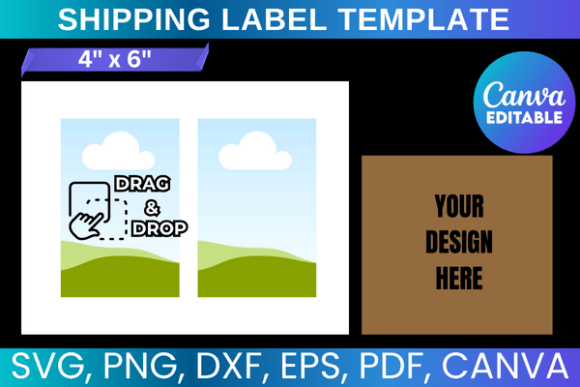
When I opened Shipping Label Template, Shipping Sticke in Canva, my first thought wasn’t “generic label”—it was “this could anchor a whole unboxing experience.” The layout balances structure and charm: clean margins, intuitive address fields, subtle texture hints, and just enough visual rhythm to feel intentional—not templated. It leans into modern design without sacrificing function, landing somewhere between handmade business warmth and small business branding polish. For a client launching artisanal candles on Etsy or a seasonal print-on-demand collection, this isn’t just filler—it’s a quiet brand amplifier.
Fits Like a Glove—When the Project Has Personality
This graphic design asset shines brightest where authenticity meets execution. I recently used it as part of a packaging design system for a local ceramicist’s holiday line—layered over kraft mailers, paired with custom stamp icons, and scaled down for sticker seals. It worked because Shipping Label Template, Shipping Sticke doesn’t scream “corporate logistics.” Instead, it supports storytelling: the rounded corners echo hand-drawn sketches; the spacing invites thoughtful typography; the editable fields in Canva make client name changes seamless. It also translated cleanly into social media graphics—reimagined as Instagram story highlights for “Order Process” and repurposed as printable design elements for behind-the-scenes blog visuals.
Where It Elevates Real Client Work
- Product mockups: Placed on flat-lay photos of boxes or poly mailers, it adds credibility without distracting from the product.
- Cricut projects: As an SVG design (when available), it cuts cleanly for custom sticker sheets—ideal for crafters building branded shipping kits.
- Printable design bundles: Bundled with packing slip templates and thank-you cards, it strengthens cohesive marketing visuals.
- Brand identity extensions: Used consistently across labels, website banners, and email footers, it reinforces recognition—even without a logo front-and-center.
- Etsy product listings: Serves as both functional label preview and aesthetic proof point that the seller values presentation.
Where Caution Is Essential
This isn’t a universal drop-in solution. In minimalist branding systems—especially those built around ultra-thin sans serifs or monochrome palettes—it can feel visually heavy. On dark backgrounds, some versions lack sufficient contrast unless manually adjusted. And at under 1.5 inches wide, fine details like dashed borders or delicate line weights blur or disappear entirely. I’ve seen it struggle in crowded layouts where it competes with photography or bold headlines—so reserve it for moments where it can breathe, like standalone packaging details or hero sections of a Shopify product page.
Readability, Trust, and the Unspoken Language of Labels
A shipping label does more than display addresses—it signals care, reliability, and intention. Shipping Label Template, Shipping Sticke earns trust through hierarchy: clear header space, logical field grouping, and generous white space. But that only holds if you honor its structure. Overcrowding fields, shrinking fonts below 9pt, or stacking too many decorative layers erodes professionalism fast. I tested it across three real-world scenarios: a black-and-white print test (confirmed legibility on thermal printers), a dark-mode website preview (adjusted stroke weight for contrast), and a Cricut vinyl cut (verified clean vector paths). Each step revealed how much the final impression hinges on disciplined usage—not just the asset itself.
Designer Notes You Can’t Skip Before Client Use
- Test in grayscale: Some “subtle” textures vanish when converted—check for unintended loss of definition.
- Preview on both light and dark mockups: Not all versions include true transparency; PNG designs may need background adjustments.
- Scale it down to 1.25” width: Does the address block remain scannable? If not, simplify fonts or remove non-essential lines.
- Place it on actual product mockups: A label floating in Canva looks different than one taped to a matte-finish box.
- Verify commercial license terms: This is critical—many Canva templates restrict resale in digital products. Confirm it covers your use case: Etsy product, print-on-demand, or client-branded merchandise.
- Compare font pairings: Try it with serif (for tradition), sans serif (for clarity), and script (for warmth)—some combos clash with its baseline energy.
Final Verdict: A Thoughtful Tool, Not a Magic Button
Shipping Label Template, Shipping Sticke won’t replace custom brand illustration—but it *does* solve real time constraints without compromising visual cohesion. For designers juggling multiple small business branding projects, it’s a reliable starting point that respects both aesthetics and utility. When paired with smart typography choices, consistent color application, and intentional placement, it becomes part of the brand voice—not just paperwork. Just remember: even the best graphic design asset is only as strong as the designer’s judgment behind it. Test it. Tweak it. Trust your eye—and always confirm licensing before delivering to a client.