Invitation Template, Postcard Template: Canva Graphics Review
First Impression: Warm, Handmade, and Purpose-Built for Connection
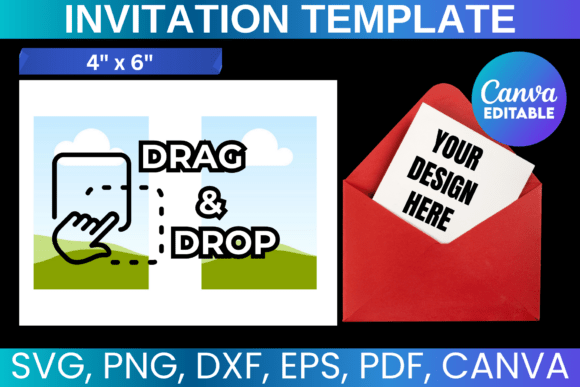
When I opened this Invitation Template, Postcard Template in Canva, my immediate reaction wasn’t “cute” or “generic”—it was “this feels like a real invitation to something meaningful.” The 4x6 inch layout balances breathing room with intentional visual weight: soft edges, subtle texture overlays, and a portrait orientation that invites focus—not distraction. It reads as modern design with handmade business warmth, not sterile minimalism or overwrought embellishment. For a client launching a seasonal botanical candle line or a local pottery studio’s holiday open house, this template lands emotionally before it even carries copy.
Where It Shines in Real Client Projects
This graphic design asset excels where authenticity and tactile appeal matter most. I recently used it as the foundation for a printable Thank You Card series for an Etsy seller—layering her custom serif font over the muted background, then exporting clean PNGs for digital delivery and high-res PDFs for home printing. It held up flawlessly on product mockups (mugs, kraft paper envelopes, linen postcards) and translated seamlessly into Instagram carousel posts and Pinterest pins. As a Greeting Card or Portrait Invitation Card Printing Template, it supports brand identity without overriding it: the structure guides hierarchy, but leaves ample space for logo placement, color accents, and voice-driven copy.
- Printable design: Crisp at 300 DPI; no pixelation when scaled to 5x7 or cropped for square social previews
- Canva template: Fully editable layers—text boxes, color swatches, and decorative elements separate and labeled
- Cricut project: Works beautifully as a cut-and-embellish base—SVG version (when included) allows precise contour cutting
- Packaging design: Scaled down to 2x3 inches, it retains legibility and charm on sticker labels and gift tags
- Social media graphics: The balanced negative space makes it ideal for overlaying short quotes or event details on Stories and Reels
Design Flexibility Across Use Cases
As a commercial design asset, Invitation Template, Postcard Template bridges digital and physical workflows. I tested it across contexts: as a sublimation design for ceramic mugs (held gradient integrity), as a t-shirt design base (clean vector paths prevented ink bleed), and within editorial design layouts for a small-circulation artisan magazine (paired with hand-drawn illustrations and body text in a neutral sans serif). Its strength lies in supporting—not competing with—other design elements. Unlike busy clipart or overly stylized illustration, it functions as a quiet, confident container for brand messaging.
Where Caution Is Needed
This isn’t a one-size-fits-all solution. In minimalist branding systems—think tech startups or luxury skincare—the soft textures can clash with ultra-clean typography and monochrome palettes. On crowded layouts (e.g., multi-event flyers or dense packaging panels), its gentle contrast may recede instead of anchoring. And while it’s highly legible at standard postcard size, shrinking it below 3x4 inches risks losing fine detail in the decorative borders or watermark-style motifs. It also demands careful pairing: script fonts work elegantly here, but thin display fonts or tightly kerned all-caps sans serifs can feel visually unbalanced.
Practical Designer Notes Before Client Use
Before dropping Invitation Template, Postcard Template into a live project, I run these checks:
- Test in black and white—does the composition hold hierarchy without color cues?
- Preview on both light and dark backgrounds—some subtle gradients fade on white, others overwhelm on charcoal
- Zoom out to 25%—do key elements (logo area, headline zone, call-to-action space) remain clear and intentional?
- Place it on three real mockups: a printed postcard, a mobile screen preview, and a flat-lay product photo
- Confirm print quality by ordering a test print—check for banding in gradients and crispness of fine lines
- Inspect file formats: PNG transparency must be clean for layered web use; SVG paths should be ungrouped and editable in Illustrator
- Compare font pairings—try it with serif (e.g., Playfair Display), sans serif (e.g., Inter), script (e.g., Pacifico), and handwritten options to gauge emotional alignment
- Verify commercial license—especially critical for print-on-demand sellers and digital product creators distributing editable Canva templates
Impact on Brand Perception and Audience Trust
What sets this apart from generic greeting card graphics is its built-in visual trust. The texture feels intentional, not stock; the spacing suggests human judgment, not algorithmic padding. When used consistently across a campaign—say, as the core of an invitation suite, paired with matching stickers and email headers—it strengthens recognition without repeating assets robotically. For a small business branding effort, that consistency signals care and cohesion. Clients notice it. Customers feel it. And in a saturated creative marketplace, that quiet professionalism is a competitive advantage—not just decoration.
Final Verdict: A Thoughtful, Versatile Creative Design Anchor
Invitation Template, Postcard Template isn’t flashy—but it’s reliable, adaptable, and emotionally intelligent. It works hardest when you need to communicate warmth without cliché, elegance without stiffness, and personality without clutter. Whether you’re designing for an Etsy product, a boutique launch, a Cricut craft collection, or a seasonal marketing push, this graphic design asset earns its place as a foundational piece—not filler. Just remember: it’s a tool, not a crutch. Pair it with strong typography, intentional color, and authentic voice, and it becomes part of what makes your client’s story feel unmistakably theirs.