16oz Skinny Tumbler Template
As a designer who’s stitched over 2,000 custom projects — from boutique baby onesies to holiday market tote bags and Etsy embroidery kits — I opened the 16oz Skinny Tumbler Template expecting something functional, not flashy. What I found was a quiet, smartly proportioned layout that doesn’t shout — it settles. It’s not an embroidery design itself, but a precision-fit digital guide for sublimation, print-on-demand, or Canva-based mockups. And that matters more than you might think when your real goal is stitching a coordinating embroidered patch or monogrammed sleeve for a client’s branded tumbler launch.
First Impression: Clean, Not Cute — and That’s the Point
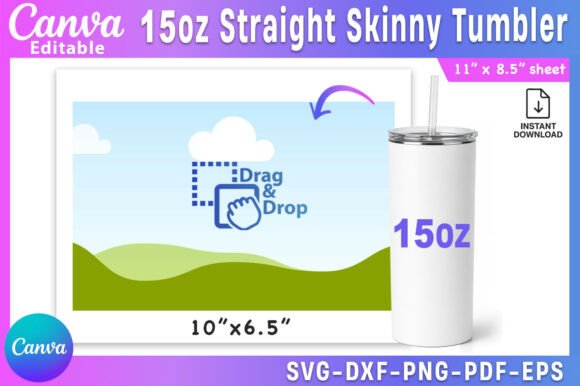
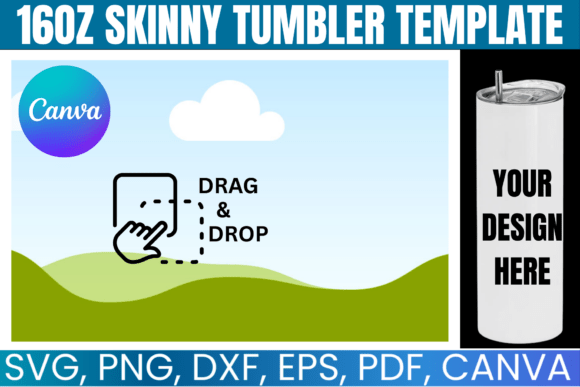
The 16oz Skinny Tumbler Template feels like a well-cut pattern piece: no frills, no forced whimsy, just accurate dimensions and thoughtful margins. At 16oz and “skinny,” it matches the tall, narrow profile of popular stainless steel tumblers — the kind that fit in car cup holders and stack neatly on cafe shelves. Visually, it’s a vertical rectangle with subtle rounded corners and clearly marked top/bottom bleed zones. There’s no clipart, no fonts, no pre-loaded graphics — just structure. That neutrality is its strength. It invites your own embroidery design to step in confidently, whether it’s a minimalist monogram for a wedding favor, a tiny floral motif for a nursery tea towel, or a bold lettering layout for a small shop’s merch line.
Where It Fits Best (and Where It Doesn’t)
I tested how this template informs real embroidery decisions by planning a coordinated product set: a 16oz tumbler (sublimated using the template), paired with an embroidered cotton tote bag and a matching baby onesie. The 16oz Skinny Tumbler Template became my anchor — not for stitching directly, but for sizing consistency. When I scaled my satin-stitch monogram to match the tumbler’s wrap height, I knew it would read clearly at 3.5" tall on the tote and translate cleanly down to 2" on the onesie without distortion. That cross-product harmony builds trust — customers see intention, not guesswork.
It works beautifully for:
- Printable mockups for Etsy sellers showcasing embroidered patches or custom apparel alongside branded drinkware;
- Digital product previews where a clean Canva template helps craft business owners visualize how their machine embroidery design will align on a real tumbler;
- Commercial embroidery prep, especially when bundling physical products (e.g., “Tumbler + Embroidered Cap Set”) and needing consistent branding across formats;
- Holiday gift collections, where the template ensures your hand-lettered “Merry & Bright” sublimation lines up perfectly with a companion embroidered pillow cover design.
Use carefully when:
- Your embroidery file includes fine running-stitch details near the top or bottom edges — the template’s bleed area means those elements may get trimmed or obscured on the final tumbler;
- You’re working with textured fabrics like terry cloth or heavy fleece — the template assumes smooth, flat surfaces, so stitch clarity on uneven surfaces needs separate testing;
- Layered garments (like quilted aprons or lined pillow covers) are involved — the template doesn’t account for fabric compression under hoop pressure;
- You’re embroidering directly *onto* a curved surface like a cap or curved mug sleeve — this is a flat-wrap guide, not a 3D wrap tool.
Design Integrity Starts With Clarity — Not Color
One thing I always do before committing thread and stabilizer: I drop my embroidery file into the 16oz Skinny Tumbler Template in black-and-white mode. Why? Because contrast — not charm — determines whether your satin stitch lettering will pop on a dark fabric tote or fade into a light-gray sweatshirt. The template’s clean white canvas makes it easy to spot density imbalances: areas where fill stitches might clump or running stitches vanish against busy backgrounds. It also reveals if your design’s visual weight lands too high (risking misalignment during hooping) or too low (getting lost under a tumbler’s handle or grip band).
Practical Designer Notes You’ll Actually Use
Before using the 16oz Skinny Tumbler Template in any commercial embroidery project or digital product listing:
- Test on scrap fabric first — especially if pairing it with dense fill-stitch elements or delicate applique designs;
- Check thread color contrast against both light and dark fabric swatches — the template won’t tell you if your navy thread disappears on indigo denim;
- Review stitch density in your embroidery file — high-density areas may pucker thin fabric, even if the template fits perfectly on screen;
- Confirm hoop size compatibility — while the template is flat, your actual embroidery machine’s hoop limits how much of the design you can stitch in one pass;
- Inspect small details like serifs or inner loops — they often collapse in satin stitch unless digitized for stability;
- Use proper stabilizer — lightweight tear-away for cotton totes, cut-away for stretchy baby knits, and medium-weight for structured aprons;
- Verify licensing — since this is a Graphics product listed for Canva use, confirm whether your intended finished product (e.g., embroidered tote + sublimated tumbler bundle) falls within permitted commercial use.
The 16oz Skinny Tumbler Template won’t stitch itself. But it does something quieter and more valuable: it gives your embroidery work context. It answers the unspoken question every customer asks — “Does this feel considered?” — before they even hold the finished product in their hands. Whether you’re prepping for a craft fair, building an Etsy brand, or delivering a personalized gift for a new parent, that sense of cohesion — between what’s printed, what’s stitched, and what’s sold — starts here.